1
/
of
7
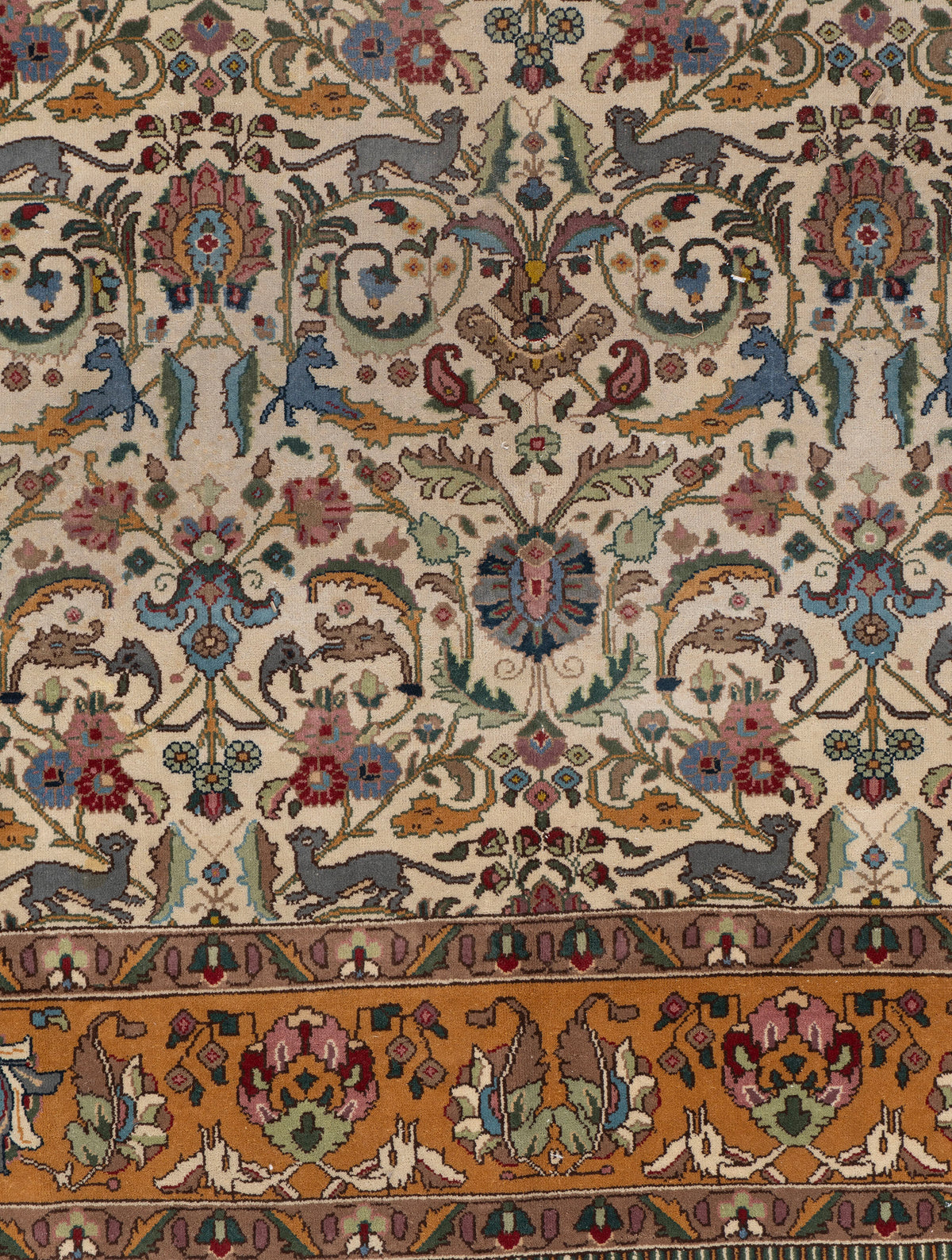
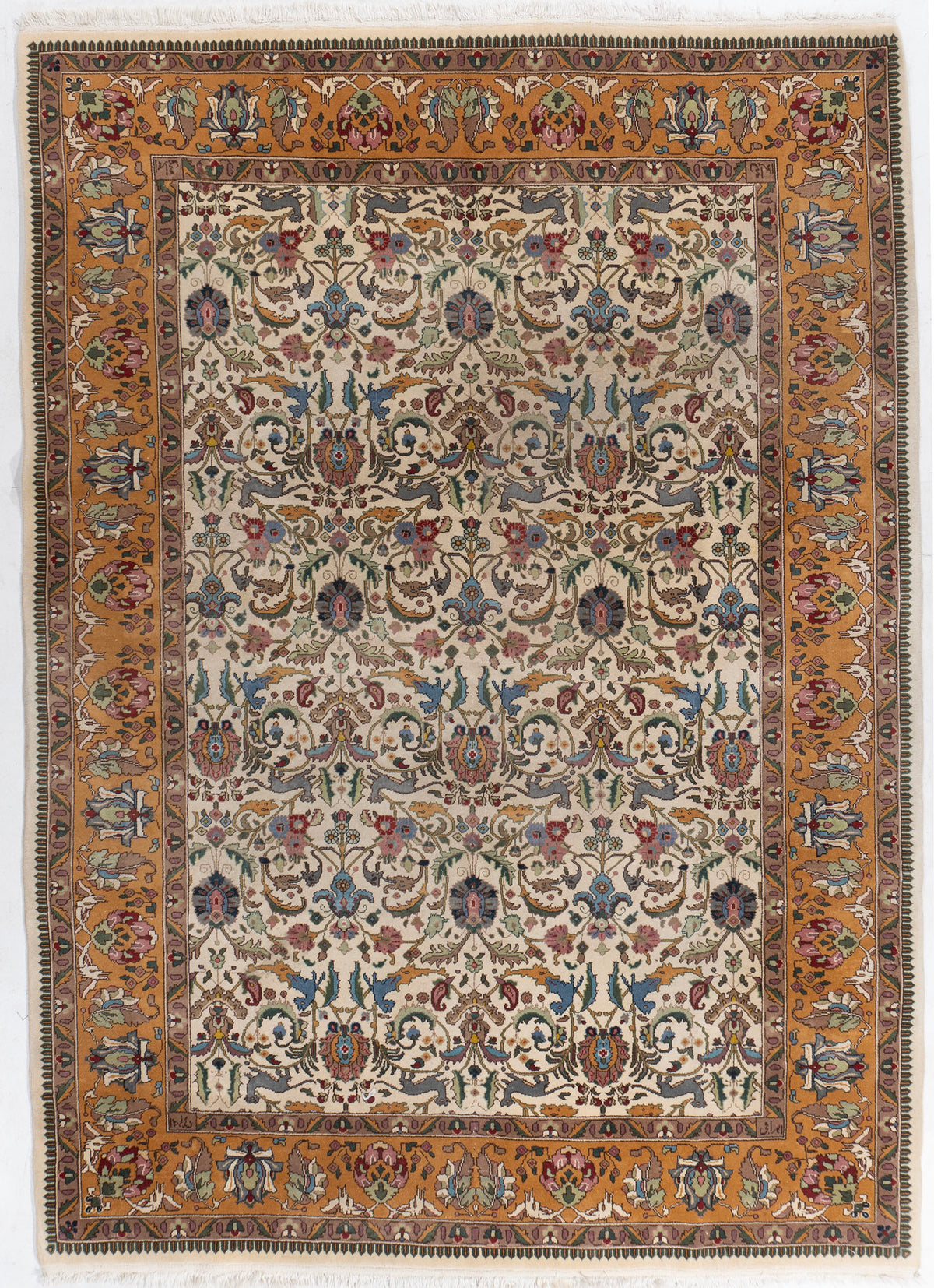
U-5371 - Vintage Tabriz Animal Pictorial Rug
U-5371 - Vintage Tabriz Animal Pictorial Rug
7ft 09in X 10ft 09in
Circa: 1940
Material/Construction: Hand Knotted Wool Cotton
Tabriz holds a special place in the history of Persian carpet weaving. For centuries it has produced a wide range of carpets—from the magnificent classical Persian masterpieces of the 16th century now found in museums, to the decorative medallion carpets of the 19th century that remain popular with designers around...
Tabriz holds a special place in the history of Persian carpet weaving. For centuries it has produced a wide range of carpets—from the magnificent classical Persian masterpieces of the 16th century now found in museums, to the decorative medallion carpets of the 19th century that remain popular with designers around the world. Tabriz is also known for fine silk rugs, sometimes used as wall hangings, as well as well-made carpets produced for a wide range of markets. The Persian carpet revival began in Tabriz around 1870, and the city’s merchants played an important role in the renewal of carpet weaving throughout Iran. As a major commercial and industrial center, Tabriz has long maintained high standards of craftsmanship. Its carpets are known for being carefully woven, well-drawn in design, and evenly dyed, reflecting the skill and discipline of its weaving tradition. Located in northwestern Persia in the province of Azerbaijan, Tabriz has been a center of culture and trade for centuries. Under Shah Abbas in the late 16th century, the city flourished as an artistic hub, and his name is still associated with some of the finest carpets from the region. Although weaving standards declined during the 18th century, the industry experienced a revival in the 19th century, helped in part by European entrepreneurs such as Heinrich Jacobi, whose company helped reestablish Tabriz as one of the great centers of Persian carpet production. Colors ivory ground/ochre/gray-blues/multi
Read More
Shipping calculated at checkout.
Couldn't load pickup availability
Speak to our rug expert: +212-532-5111
Caring for your rug
Caring for your rug
Vacuum your rug frequently and use a vacuum which uses suction and does not have bristles. If possible, set vacuum to low power setting and vacuum the rug up and down and do not use a back-and-forth motion.
If possible, rotate the rug every few years to allow foot traffic to be spread evenly and shade the rug from direct sunlight to avoid fading in areas.
A rug pad is recommended on all surfaces to prevent slipping and stop marking if on floors with grooves or lines. Professional cleaning is recommended every two or three years.
Product Inquiry